
Back to Basics: Managing Noise at Work
The Control of Noise at Work Regulations 2005 (the Noise Regulations) aim to ensure that workers’ hearing is protected from excessive noise at their place of work.
Loud noise at work can cause hearing damage that is permanent and disabling. This can be gradual, from exposure to noise over time, but damage can also be caused by sudden, extremely loud, noises. It can also contribute to tinnitus and can make everyday communication harder, affecting quality of life at work and at home.
Excessive noise in the workplace can also interfere with communications and make warnings harder to hear. It can also reduce people’s awareness of their surroundings. These issues can lead to safety risks – putting people at risk of injury or death.
The scale of the problem
HSE’s Labour Force Survey (LFS) estimate indicates around 15,000 prevalent cases each year of self-reported hearing problems caused or made worse by work, averaged across 2022/23–2024/25 (includes new and longstanding cases).
What the law requires
You must assess and control noise risks where work activities expose employees (and other workers affected by your work) to harmful noise.
Key thresholds (daily/weekly personal exposure):
Lower exposure action value: 80 dB(A):
Assess risk, provide information/training, and make hearing protection available
Upper exposure action value: 85 dB(A):
Implement a noise control programme, provide hearing protection, and enforce its use in hearing protection zones
Exposure limit value: 87 dB(A) (after taking hearing protection into account)
Workers must not be exposed above this
Peak (sudden loud noise) thresholds also apply:
- 135 dB(C) (lower) and 137 dB(C) (upper) peak action values
Your core duties under the Regulations
- Health surveillance (hearing checks) where risk indicates it’s needed
- Prevent or reduce exposure at source so far as reasonably practicable (do not rely on PPE as the primary control)
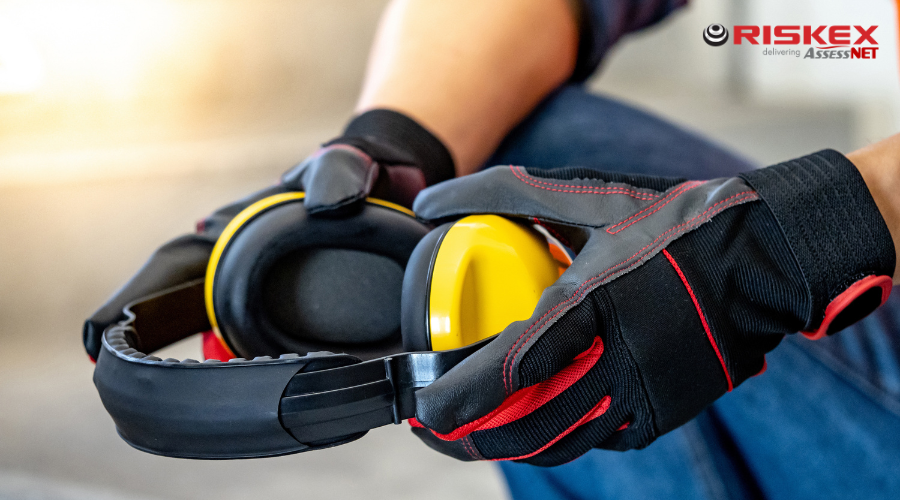
- Provide suitable hearing protection when needed and ensure it’s used correctly
- Maintain noise controls and equipment (poor maintenance often increases noise)
- Inform, instruct, and train workers
How to manage noise risk and what “good” looks like
Step 1: Identify where the risk exists
Common red flags: raised voices needed at 1–2 metres, ringing ears after a shift, noisy tools/plant, metal-on-metal processes, compressed air use, maintenance bays, fabrication, woodworking, waste/recycling lines, loading yards.
Use measurements where exposure could be at or above the action values. HSE provides tools and guidance to help estimate exposure and decide when a competent assessment is required.
Step 2: Control noise using the hierarchy
Eliminate or reduce at source – best options:
- Buy/hire quieter machinery (build a low-noise purchasing standard into procurement)
- Replace processes (quieter cutting/grinding methods for example)
- Reduce impact noise (damping, improved fit, changes to materials and/or fixtures)
Engineering controls – next best:
- Enclosures, acoustic screens, barriers, absorbent linings
- Isolate vibrating equipment, maintain bearings/blades, fix rattles and air leaks
Workplace layout and administrative controls (supporting controls):
- Move people away from sources and create quiet workstations
- Limit time in noisy areas – job rotation where appropriate
- Practical rule of thumb: halving time in a noisy area reduces exposure by ~3 dB
Step 3: Hearing protection
When engineering controls cannot reduce exposure enough:
- Provide protection that fits the person and the task
- Train users on fitting, checking seal, storage, replacement, and limitations
- Create and enforce hearing protection zones at/above upper action values
Step 4: Health surveillance (catch harm early)
Where there’s a continuing risk (particularly at/above upper action values), hearing checks help detect early change and show whether controls are working.
Step 5: Training and supervision
Training should cover: what the risks are, what the action levels mean, how controls work, correct PPE use, and why maintenance and reporting defects matters. Supervision must reinforce this daily.
Treat noise like any other high-risk hazard: eliminate what you can, control what remains, and monitor drift over time.